Aluminum Warehouse Tents for Mining and Industrial Sites
Mining operations and heavy industrial sites frequently require covered storage that can be deployed quickly in remote or temporary locations. Permanent buildings are often impractical due to shifting work faces, short project timelines, difficult ground conditions or high capital cost. At the same time, standard light-duty tents rarely provide the durability, height or weather performance needed to protect equipment, spare parts, consumables and bulk materials.
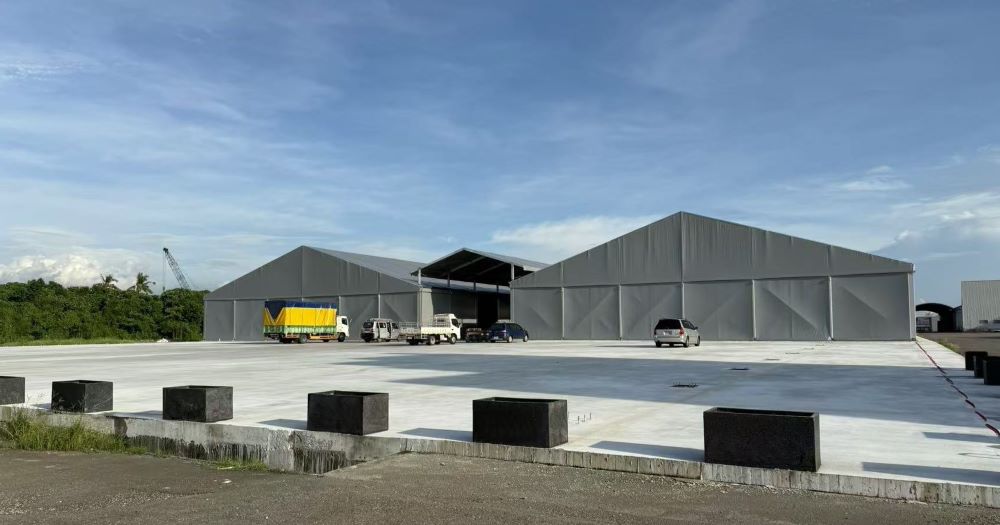
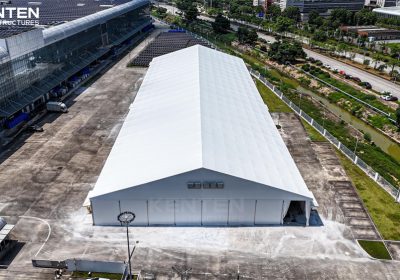
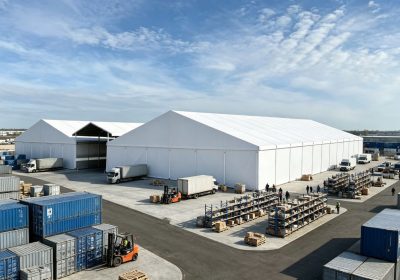
Aluminum warehouse tents (industrial clear-span storage structures) offer a practical solution. These modular systems deliver large, column-free interiors that resist harsh environmental conditions, can be installed with limited foundation work, and remain relocatable as site needs change.
Operational Realities at Mining and Industrial Sites
Site managers and procurement teams typically evaluate storage structures against these priorities:
- Rapid deployment in remote locations — Structures must be transportable and erectable with available site resources.
- Resistance to harsh conditions — High winds, heavy rain, dust, UV exposure and wide temperature ranges are common.
- Minimal ground preparation — Uneven, rocky or environmentally sensitive terrain often limits extensive foundations.
- Clear-span interior and sufficient height — Space for large equipment, palletized materials and vehicle access without internal columns.
- Relocatability — Ability to dismantle and move the structure as mining progresses or projects relocate.
- Durability under repeated use — Frames and covers must withstand multiple installation cycles and rough handling.
- Safety and compliance support — Clear technical data for internal risk assessments and insurance requirements.
How Aluminum Warehouse Tents Meet These Requirements
Fast and logistics-friendly installation
Prefabricated aluminum components reduce on-site construction time compared with traditional buildings. This is critical when storage is needed to support ongoing operations or protect newly arrived equipment.
Clear-span design
No internal columns maximize usable floor area and simplify movement of machinery, forklifts or large components. High eave and ridge heights further improve operational flexibility.
Weather and environmental performance
KENTEN warehouse tents use high-strength aluminum alloy frames (typically 6061/T6) with corrosion-resistant finishes. Covers are heavy-duty PVC with waterproof, UV-stabilized and flame-retardant properties. Wind resistance ratings commonly fall in the 80–140 km/h range depending on configuration and anchoring, supporting use in exposed locations.
Low foundation impact and site adaptability
Anchoring systems can be adapted to different ground conditions using ground anchors, weight plates or limited foundation points. This reduces civil works and helps meet environmental or permitting constraints common on mining and industrial sites.
Modular and relocatable construction
Length is typically extended in standard bay increments. The entire structure can be dismantled, transported and re-erected at a new location, allowing storage capacity to follow the work face or move between projects.
Service life suited to project cycles
With proper maintenance, aluminum frames support multi-year use and repeated relocation — aligning with the temporary-to-semi-permanent nature of many mining and industrial storage needs.
Typical Applications on Mining and Industrial Sites
- Storage of spare parts, consumables and critical equipment
- Covered workshops or maintenance areas
- Protection of bulk materials and bagged products
- Temporary warehousing for construction or expansion phases
- Secure, weather-protected holding areas near processing plants or remote camps
Key Evaluation Criteria for Site and Procurement Teams
Experienced buyers usually request:
- Clear span width, eave height and ridge height options
- Wind, snow and temperature performance data relevant to the site
- Frame material grade and corrosion protection details
- Cover specifications (weight, flame retardancy, UV resistance)
- Anchoring methods suitable for local ground conditions
- Installation sequence and estimated programme
- Evidence of previous use in similar industrial or remote environments
- Warranty, spare-parts availability and technical support
Clear documentation accelerates internal engineering, safety and commercial approvals.
KENTEN Warehouse Tent Solutions for Industrial Environments
KENTEN manufactures modular aluminum clear-span warehouse tents designed for demanding industrial and remote applications. Relevant features include:
- Clear-span interiors with no internal support columns
- Configurable spans (commonly 10–40 m and customizable) with high eaves suitable for equipment and stacking
- High-strength aluminum alloy frames engineered for repeated assembly and transport
- Durable PVC covers with strong weather and flame resistance
- Modular length extension
- Anchoring options adaptable to varied ground conditions
- Production under ISO 9001, ISO 14001 and ISO 45001 certified management systems
These characteristics match the practical needs of mining and industrial operators who require reliable covered space that can be deployed and relocated efficiently.
Next Steps for Mining and Industrial Decision-Makers
To develop an accurate proposal, provide:
- Required clear span and approximate floor area
- Preferred eave height and any specific equipment or vehicle clearance needs
- Expected duration of use and possibility of future relocation
- Local climate data (wind, temperature extremes, precipitation)
- Ground conditions and site access constraints
- Requirements for doors, ventilation, lighting or additional protection
Technical specifications, structural data and project references are available through the official channels:
Aluminum warehouse tents give mining and industrial sites a proven method to establish professional-grade storage capacity quickly, protect valuable assets from harsh conditions, and retain the flexibility to adapt or relocate as operational priorities change. When specified against clear site and performance criteria, they become reliable infrastructure rather than temporary compromises.