When the venue is tight but the ambitions are not, people start looking for something clever. A two story tents — sometimes called a double Decker tent — stacks two functional levels into the same ground footprint, letting organizers do things a conventional marquee simply cannot. Formula 1 teams, Olympic event managers, and international exhibition planners have been relying on multi-level temporary structures for years. Here is what actually matters before you rent or buy one.
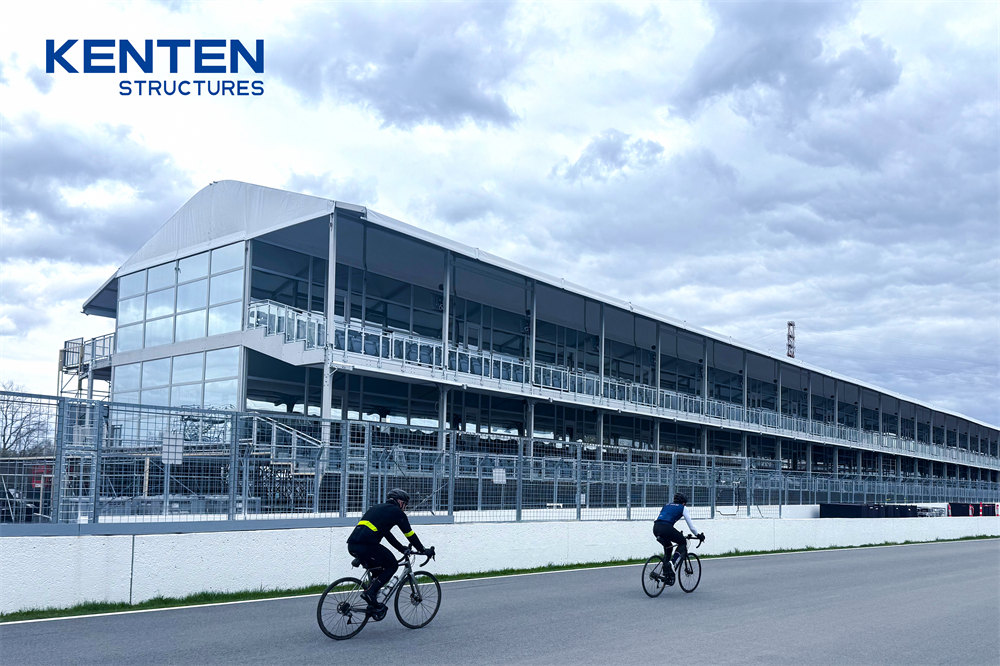
What Is a Two Story Tents?
A two story tent is a modular temporary structure with two full-height floors. The ground level typically handles operations — reception, registration, exhibit space, catering setup. The upper level functions as a viewing deck, hospitality suite, meeting rooms, or media center, with unobstructed sightlines over the surrounding venue. Some configurations enclose the upper deck with glass walls or transparent PVC for panoramic views; others leave it open-sided to let air through.
The reason these structures exist is simple: some venues have almost no horizontal room to spare. Race track infields, inner-city event grounds, zones between a stadium and its parking areas — these are places where thinking vertically is not optional, it is the only option.
The concept started in equestrian and motorsport, where premium viewing sold by the tier and space was always short. It has since spread well beyond that world.
Why Two Levels Beat One
Doubled capacity on the same ground is the obvious part. The less obvious gains are where it gets interesting.
Functional separation without construction. Ground floor for operational traffic; upper deck for guests who paid a premium. No walls to build, no planning permission to chase. When the event ends, the whole thing comes down and leaves no trace.
Sightlines that conventional tents cannot deliver. The upper deck sits high enough to clear fences, temporary barriers, and the heads of a ground-level crowd. At a race circuit, that means a rooftop hospitality suite with an unobstructed view of the track. At an equestrian event, it means judges and commentators can see the full arena from above the stable blocks.
Crowd flow that actually works. Splitting foot traffic across two levels reduces pressure on entry and exit points. Security checkpoints, ticketing, and crowd management become far simpler when the venue has vertical as well as horizontal space.
Revenue architecture, not just logistics. Hospitality packages tied to upper-deck access command significantly higher per-head revenue than general admission ground passes. That upper deck pays for itself faster than most organizers expect.
KENTEN’s Double Decker systems use 6061-T6 aluminum alloy frames rated for wind loads exceeding 120 km/h. The PVC membrane throughout carries CPAI-84 and NFPA-701 flame retardancy certification — the standard required at most major venues in North America and Europe.
Where Two Story Tents Show Up
These structures have moved well beyond motorsport. The most common real-world settings:
Formula 1 and Motorsport
This is where the concept is most visible. KENTEN supplied three Double Decker structures to top racing teams at the FORMULA 1 SINGAPORE GRAND PRIX 2025 — each one serving as a multi-use hospitality facility with dining areas, technical briefing rooms, and rooftop viewing over the paddock. The same setup appeared at the 2022 F1 Miami Grand Prix, where upper decks served sponsor entertainment zones with direct sightlines to the start/finish straight.
At street circuits — Monaco, Singapore, Baku, Miami — permanent hospitality buildings do not exist. The two story temporary structure is the only viable premium option.
Equestrian and Show Jumping Events
Equestrian venues are almost always land-constrained. The arena ring, stable blocks, practice areas, and spectator parking compete for every square meter. A two story tent adds spectator capacity without stealing space from the horses. KENTEN has installed 30-meter span aluminum structure tents at equestrian venues in the United States, giving viewers elevated views of the entire arena.
Trade Shows and Exhibitions
Exhibition centers fill up. When an organizer needs more floor space but cannot expand the building, a two story tent outside becomes a logical overflow. Ground floor handles registration and small exhibits; the upper deck hosts meetings, product demos, or a second tier of booths. KENTEN’s exhibition tents have appeared at the Changsha International Construction Machinery Exhibition and trade events across Asia and the Middle East.
Corporate Events and Luxury Weddings
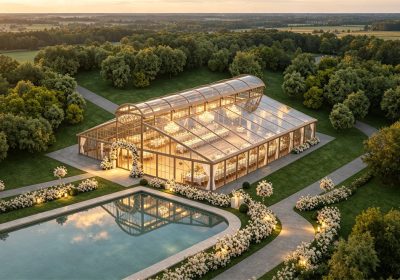
Hotel ballrooms have a ceiling — literally and economically. A two story tent beside a hotel lets the event scale past the building’s limits while keeping the premium feel upper-tier guests expect. Glass walls, custom branding, climate control, and lighting rigs all transfer directly from permanent venues into the temporary structure.
Sports Events and VIP Lounges
Cricket World Cup matches, international football tournaments, athletics championships — these consistently deploy two story tents as VIP lounges and media centers. The upper deck gives broadcast teams elevated camera positions. The ground floor houses catering, press briefing rooms, and sponsor activation.
Beyond Two: Triple Decker and Multi-Level Configurations
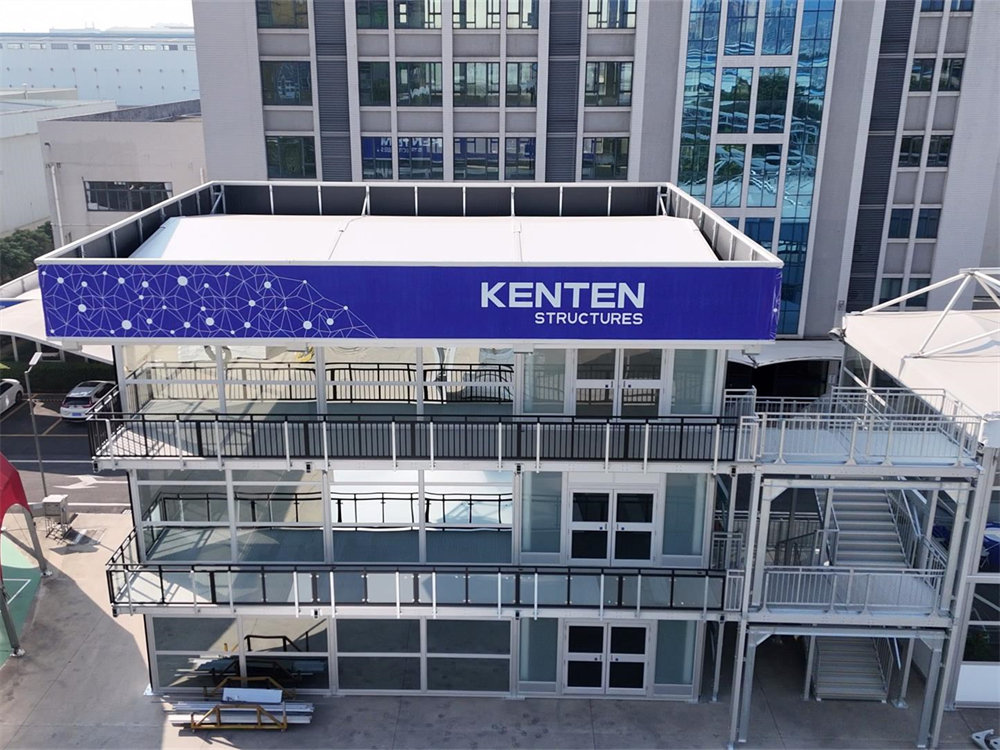
Some events need even more. KENTEN’s product range includes Triple Decker Tent systems — designed for Olympic village logistics, F1 paddock villages, and international summits where dozens of functions must coexist in a compact zone.
A three story structure can stack functions this way:
- Ground floor: operational base, storage, staff areas
- Second floor: catering, dining, general hospitality
- Third floor: VIP boxes, media broadcast, executive meeting rooms
Each level operates independently, with separate entrance routes, staircase or lift access, HVAC zoning, and independent lighting controls. No single-level structure matches this kind of functional separation at the same footprint.
Choosing a Two Story Tent Manufacturer
Suppliers differ more than their brochures suggest. Here is what actually separates the viable options from the rest.
Engineering and certification. The frame must be load-tested for wind, snow, and seismic conditions. KENTEN carries ISO 9001, ISO 14001, and ISO 45001 certification, and their engineering team provides stamped structural calculations for projects that require local permit approval — which is most major events in Europe and North America.
Material quality. Aerospace-grade aluminum frames outperform commercial-grade alloy on strength-to-weight ratio. High-tenacity PVC membrane at minimum 650 g/m² resists punctures, UV damage, and temperature extremes. Budget structures use lighter materials that look similar until the first storm hits.
Installation capability. Temporary structures at major events need fast, precise assembly by crews who have done this before. KENTEN’s crews have worked the Beijing Winter Olympics, the Beijing Olympics, the Hangzhou Asian Games, and the Guangzhou Asian Games — which is a different class of logistical challenge than a weekend festival.
Customization depth. Standard configurations work for some events. Most premium projects need custom dimensions, branding, flooring, lighting, and climate control integration. KENTEN handles custom designs from 3D modeling through to production and on-site installation, with no hand-off to a third-party contractor.
Track record at comparable scale. Get references — and actually call them. KENTEN’s project list covers F1 circuits, Olympic venues, and major international exhibitions in 80+ countries. That is a meaningful data point when you are committing to a structure that will be on-site for weeks.
Two Story Tents Specifications
KENTEN’s standard Double Decker configurations:
- Clear span widths: 10m to 30m
- Sidewall height per level: 4m to 6m
- Total structure height: up to 8m to 10m stacked
- Frame: 6061-T6 aluminum alloy
- Roof: 850g/m² block-out PVC or 650g/m² transparent PVC
- Wind resistance: certified to 100+ km/h
- Flame retardancy: CPAI-84 Section 4 and NFPA-701
- Configurable floor plans, staircases, balustrades, and mezzanine options
Custom spans up to 50m are available for hangar and warehouse applications.
Why Organizers Choose Temporary Over Permanent
A permanent hospitality tower at a race circuit costs millions to build, requires years of planning approval, and sits empty between events. A KENTEN double Decker costs a fraction of that, assembles in days, and travels to different venues throughout the year.
For event series — F1, equestrian circuits, international sports federations — this portability is the whole proposition. The same structure deployed in Singapore can be in Miami the following season, with new branding and a different floor plan.
FAQ
What is the difference between a double Decker tent and a two story tent?
Nothing. These describe the same thing — a temporary structure with two full-height levels stacked vertically. Double Decker is the motorsport and event hospitality term; two story tent is what planners in other verticals search for.
How long does installation take?
A standard 15m x 30m double Decker typically assembles in 3 to 5 days with 8 to 12 trained technicians. Larger or fully custom configurations run 7 to 14 days depending on site conditions.
Can these structures handle bad weather?
Yes. KENTEN’s structures are certified for wind loads exceeding 100 km/h with rain-proof sealed-seam PVC roofing. Optional upgrades include climate control, snow load reinforcements for winter events, and wind deflection barriers for exposed sites.
Are two story tents safe for public events?
When engineered and installed correctly, they meet or exceed local safety standards for temporary structures. KENTEN’s materials carry CPAI-84 and NFPA-701 flame retardancy certification, required at most venues in North America and Europe. Their engineering team provides stamped structural calculations for jurisdictions that require formal permit approval.
What customization options exist?
Custom exterior branding on PVC panels, interior lighting rigs, glass wall systems, flooring (wood, carpet, modular tile), furniture, and full climate control are all standard offerings. KENTEN’s design team produces 3D visualizations before production, so clients review the finished appearance before manufacturing begins.
How many people can a two story tent accommodate?
A standard 20m x 40m double Decker comfortably handles 300 to 500 guests across both levels, depending on layout. Capacity scales with structure size. KENTEN’s engineering team designs floor plans to meet specific capacity and fire safety requirements for each project.
Rent or buy — which makes more sense?
Rental works for one-off events. Purchase makes sense for organizations running multiple events annually. Pricing depends on structure size, specification level, customization scope, and whether installation crew is included — contact them directly with your project details.
Get a Quotation
KENTEN has installed double Decker and triple Decker structures at the Formula 1 Singapore Grand Prix, F1 Miami Grand Prix, 2022 Beijing Winter Olympics, 2022 Hangzhou Asian Games, and across 80+ countries. Their 80,000+ square meter manufacturing facility operates to ISO-certified standards, with in-house engineering from 3D design through production and on-site installation.