A Planner-Oriented Capacity Guide for European & North American Events
When Temporary Structures Become Part of the Experience
In European and North American markets, temporary event tents are no longer perceived as neutral structures assembled for short-term use. They are expected to actively contribute to atmosphere, storytelling, spatial hierarchy, and brand identity. From luxury weddings and cultural celebrations to brand promotions and VIP hospitality, planners increasingly treat temporary tents as experiential architecture rather than functional infrastructure. This shift has fundamentally reshaped how modular systems—especially atrium-style structures—are specified, evaluated, and deployed. KENTEN Atrium Tents are engineered precisely for this new expectation: where architectural presence, spatial comfort, and professional compliance must coexist.

Why Atrium Tents Are Increasingly Popular in Western Markets?
Architecture That Enhances Brand and Place
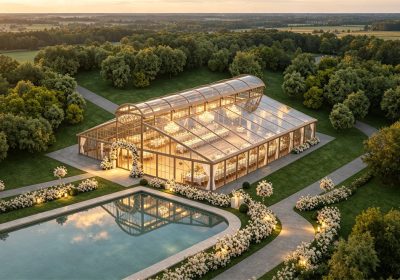
Whether installed on a beach, lawn, historic plaza, or in front of a modern building, atrium tents are selected not merely for coverage, but for how they visually integrate with their surroundings. High roof volumes, symmetrical geometry, and transparent facades allow the structure to complement—rather than compete with—the site context. This means the tent itself becomes part of the event narrative.
Light, Transparency, and Emotional Comfort
Western audiences place strong emphasis on atmosphere and emotional perception. Daylight penetration, vertical openness, and visual continuity between interior and exterior significantly influence guest experience. Atrium tents naturally support this expectation. During daytime events, natural light floods the interior; at night, the tent transforms into a luminous architectural landmark—particularly effective for weddings, ceremonies, and brand-driven experiences.
What Is a KENTEN Atrium Tent?
KENTEN Atrium Tent is a modular aluminum architectural system designed for temporary, semi-permanent, and long-term event applications. Unlike conventional tents, it is conceived as a pavilion-style space, combining expressive form with predictable engineering performance. Depending on configuration, atrium tents may include architectural roof features or internal support columns.

Key structural characteristics include:
- High-strength 6061/T6 aluminum alloy framework
- Large-span interiors with architectural roof geometry
- Modular bay lengths enabling scalable layouts
- Compatibility with PVC membranes, glass facades, or solid wall systems
- Designed for temporary, semi-permanent, and long-term installations
Engineering Advantages Behind the Geometry
Efficient Load Distribution
The geometric clarity of atrium tent allows loads to be distributed evenly across the frame system, minimizing localized stress. This results in reliable performance under wind, rain, and snow loads— particularly relevant for coastal and alpine regions.
Climate Adaptability
Atrium tents are engineered to adapt to diverse environmental conditions, supporting efficient rainwater runoff, snow shedding, and resistance to uplift forces caused by strong winds.
Lightweight Construction, Minimal Foundations
Thanks to optimized aluminum systems, atrium tents can be installed on lawns, beaches, waterfronts, rocky terrain, and other sensitive sites where permanent foundations are restricted.
How Event Planners Calculate Guest Capacity
In professional event planning, capacity is not a fixed number. It is a design decision based on layout, circulation, safety, and guest comfort.
Event planning capacity reflects how many guests can be hosted comfortably and professionally, accounting for:
- Seating style (round tables, banquet, ceremony)
- Internal columns or architectural supports
- Dance floors, stages, bars, buffet areas
- Circulation aisles and emergency exits
For atrium tents used in weddings and premium social events in Europe and North America, planners typically allow:
- Usable space ratio: approximately 75–85%
- Planning density: approximately 1.6–1.8sqm per guest
Quick Reference: Guest Count vs. Recommended Atrium Tent Size
Scenario: Seated wedding or premium event with dining, internal structure elements, and multiple functional zones.

| Guest Count | Total Area |
| 150 guests | 300–360sqm |
| 200 guests | 400–500sqm |
| 250 guests | 500–600sqm |
| 300 guests | 600–750sqm |
These figures are based on the assumption of:
- Net usable ratio around 80%
- Guest density: around 1.7sqm/guest
- Additional allowance for circulation and service zones
Typical Functional Area Allowances
| Function Zone | Typical Allowance |
| Dance floor | 10–15% |
| Stage / band / DJ | 6–10% |
| Bar / buffet | 5–10% |
| Circulation & egress | 10–15% |
| Structural & decor tolerance | 5–8% |
KENTEN Atrium Structure vs. Conventional Structure
Characterized by clean geometry and high-transparency facades, KENTEN Atrium Tent naturally attracts attention and invite public interaction. Unlike conventional tent, KENTEN Atrium Tent is designed as architectural spaces, not temporary enclosures.
- Glass doors of various options
- Glass / ABS / Sandwich facades
- Flooring solutions
- Lighting and other suspended equipment
- HVAC systems
Every component is selected to serve operational efficiency, safety compliance, and long-term performance.
| Aspect | Atrium Tent | A-Frame Tent |
| Visual Character | Architectural, refined | Functional, industrial |
| Site Integration | Blends into natural & urban settings | Often visually intrusive |
| Interior Experience | Open, bright, architectural | Enclosed, utility-oriented |
| Styling Flexibility | High | Limited |
| Guest Experience | Comfortable, emotionally engaging | Basic shelter-focused |
Typical Applications in European Markets:
KENTEN Atrium Tent is a particularly well-suited for experience-oriented projects:
- Sports events & fan zones
- Festivals and seasonal celebrations
- Brand marketing & product launches
- Corporate events & experiential marketing
- Weddings & private celebrations
- Hospitality lounges & VIP areas
- Musical parties & entertainment spaces
- Temporary restaurants & pop-up dining venues
- Cultural ceremonies & public gatherings
KENTEN Atrium Tent is designed to support guest flow, spacial hierarchy, and experiential storytelling, making it suitable for both intimate events and memorable ceremonies.
Frequently Asked Questions
1.Why can’t one fixed capacity number be provided?
Because capacity depends on layout. Seating style, functional zones, and circulation requirements vary by event.
2.Do atrium tents require more space than clear span tents?
Slightly. Architectural elements may reduce usable efficiency, which planners compensate for with higher sqm-per-guest allowances.
3.Can tent size be reduced if no dance floor is required?
Yes. Removing dance floors or stages can reduce total area by approximately 10–20%.
4.Are these figures conservative?
They are realistic, aligned with European and North American planner expectations rather than theoretical maximums.
5.Do local fire and safety codes override these recommendations?
Always. Final layouts must comply with local regulations and authority approval.
Conclusion: Experiential Architecture for the Future
Capacity should never be treated as a promise—it is a planning tool. KENTEN Atrium Tent enables planners, venues, and clients to design events that are not only compliant, but comfortable, elegant, and memorable. Temporary by definition, architectural by nature—KENTEN Atrium Tent is built not just to stand, but to be experienced.
Contact KENTEN to discuss a customized an atrium tent for your upcoming event.