Meta’s New AI Data Center Strategy Signals a Shift in Construction
As the global race for Artificial Intelligence accelerates, tech giants are facing an unexpected challenge: how to build data centers fast enough to meet exploding AI demand.
Recently, Meta announced that it is exploring rapid-deployment modular facilities—including temporary and semi-permanent structure buildings—to accelerate the construction of AI computing infrastructure. This unconventional approach has attracted significant attention across the technology and construction industries.
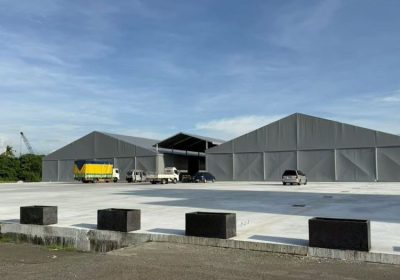
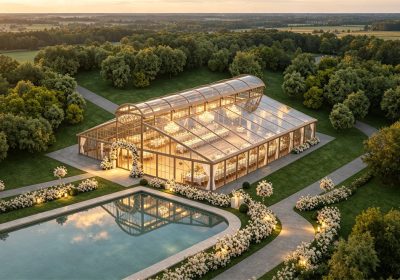
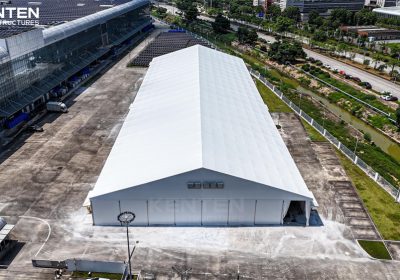
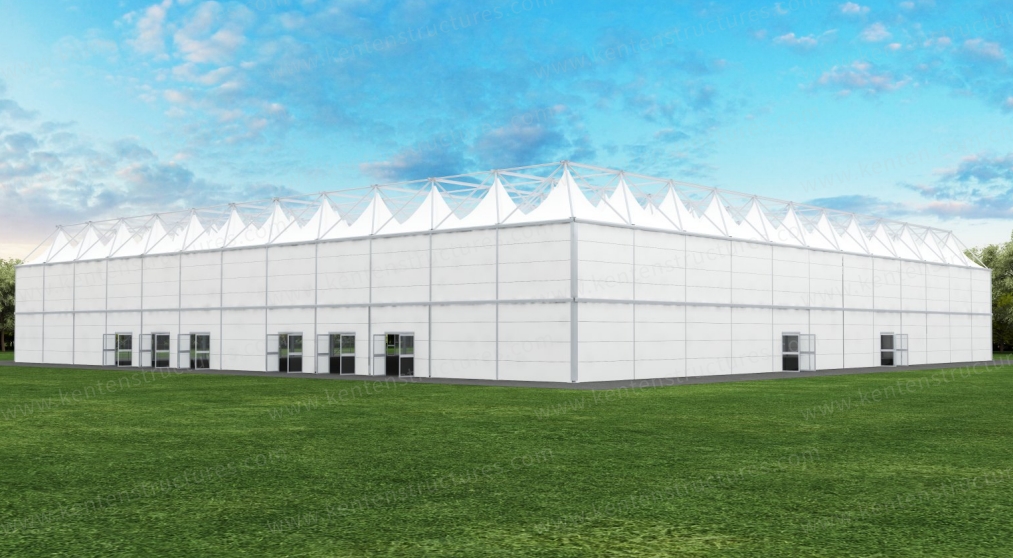
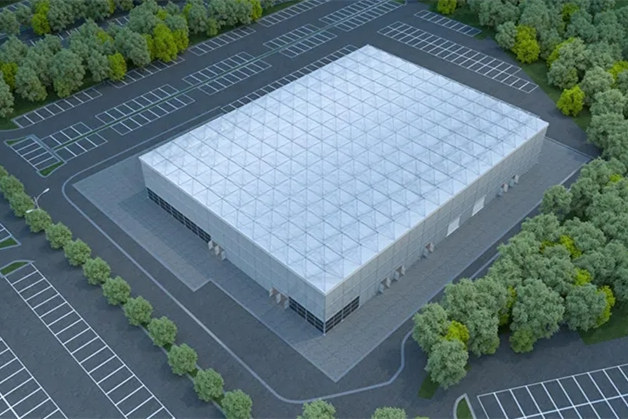
What many people call a “tent data center” is actually a highly engineered modular structure designed to provide large-span covered space, environmental protection, and fast deployment capabilities.
For companies requiring speed, scalability, and cost efficiency, modular aluminum structure buildings are becoming a practical alternative to conventional construction.
Why Traditional Data Center Construction Is Too Slow
The AI boom is creating unprecedented demand for computing capacity.
Traditional data center projects often require:
- 18–36 months construction cycles
- Extensive permitting processes
- Large upfront capital investment
- Complex foundation requirements
- Limited flexibility for expansion
For AI companies, cloud providers, mining operations, and industrial users, waiting years for new facilities is no longer acceptable.
This is why modular structure buildings are gaining attention.
The Rise of Modular Structure Buildings for Data Centers
Modern structure tents are no longer simple event shelters.
Today’s large-span aluminum structures can function as:
- AI Data Center Buildings
- Temporary Server Facilities
- Edge Computing Centers
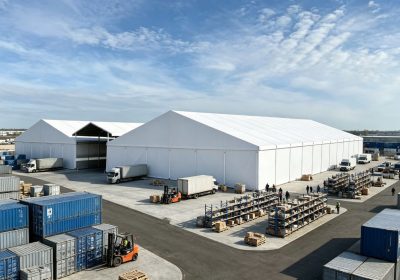
- Equipment Warehouses
- Energy Storage Facilities
- Battery Manufacturing Plants
- Industrial Production Buildings
- Logistics Distribution Centers
With modular construction methods, facilities can be deployed within weeks rather than years.
How KENTEN Modular Structures Support Rapid AI Infrastructure Deployment
Founded in 2001, KENTEN is a global manufacturer specializing in temporary and semi-permanent modular structures, aluminum buildings, warehouse tents, and large-span industrial facilities. KENTEN operates a U.S. operation center and a manufacturing center in China, serving projects worldwide.
KENTEN’s industrial structure systems feature:
Large Clear Span Design
KENTEN structures provide clear-span widths from 3m to 60m and beyond, creating unobstructed interior space for:
- Server racks
- Cooling systems
- Power equipment
- Battery storage
- Maintenance access
Technical specifications include high-strength aluminum alloy frames manufactured using 6061/T6 and 6082/T6 materials.
Rapid Deployment
Compared with traditional buildings:
| Building Type | Deployment Time |
|---|---|
| Conventional Data Center | 18–36 Months |
| Modular Structure Building | Weeks |
This enables AI companies to bring computing capacity online significantly faster.
Expandable Modular Design
As AI workloads grow, facilities can be expanded by adding modular bays rather than constructing entirely new buildings.
Weather-Resistant Engineering
KENTEN structures utilize flame-retardant PVC membrane systems and corrosion-resistant aluminum frameworks engineered for long-term operation.
Flexible Wall and Insulation Options
Available accessories include:
- Sandwich Panels
- Glass Walls
- Aluminum Flooring
- Industrial Rolling Doors
- HVAC Integration
allowing facilities to be customized for various environmental requirements.
Applications Beyond AI Data Centers
The same infrastructure principles adopted by technology companies can be applied across industries.
Warehouse and Logistics Centers
E-commerce growth requires rapid warehouse expansion.
KENTEN warehouse tents provide scalable storage capacity without permanent construction delays.
Energy Storage Facilities
Battery energy storage systems (BESS) require covered, expandable structures that can be deployed quickly near power infrastructure.
Manufacturing Expansion
Factories facing sudden production demand can deploy temporary production buildings while permanent facilities are under development.
Disaster Recovery Centers
Modular structures can rapidly establish operational facilities following natural disasters or infrastructure failures.
Why Global Companies Are Choosing Structure Buildings
The appeal is straightforward:
✓ Faster deployment
✓ Lower capital investment
✓ Scalable expansion
✓ Reduced construction complexity
✓ Sustainable reuse
✓ Relocatable infrastructure
As AI demand continues driving unprecedented infrastructure growth, modular structure buildings are emerging as one of the most practical solutions available.
Why Choose KENTEN?
KENTEN has delivered modular structure solutions for international events, sports facilities, exhibitions, logistics projects, and industrial applications worldwide. The company has participated in major global projects including the Beijing Olympic Games, Beijing Winter Olympics, Asian Games, and Formula 1 events across multiple countries.
With global operations, advanced CNC manufacturing capability, and decades of engineering experience, KENTEN helps organizations deploy large-span modular facilities quickly and efficiently.
Whether you are planning an AI data center, warehouse expansion, manufacturing facility, or energy infrastructure project, KENTEN can provide a customized modular building solution designed for rapid deployment and long-term performance.
Frequently Asked Questions
Can a structure tent be used as a data center?
Yes. Modern modular structure buildings can be equipped with insulation, HVAC systems, flooring, power distribution, and enclosure systems suitable for data center applications.
How fast can a modular data center building be installed?
Depending on size and site conditions, installation can often be completed in weeks rather than months or years.
What span sizes are available?
KENTEN offers modular structures ranging from 8m to 60m+ clear span widths, with virtually unlimited length configurations.
Are modular structures suitable for long-term use?
Yes. Semi-permanent aluminum structures are engineered for long service life and can remain operational for many years with proper maintenance.