Introduction
Temporary sports facilities typically utilize aluminum alloy structures + PVC membrane fabric for rapid installation and customizable designs. These facilities meet full-specification gymnasium functional requirements while offering significantly shorter construction cycles and lower investment costs compared to permanent structures.
This guide explains how temporary sports facilities operate, their advantages, application scenarios, and design solutions, while analyzing why aluminum-structured gymnasiums have become the preferred choice for modern sports infrastructure.

What Are Temporary Sports Facilities?
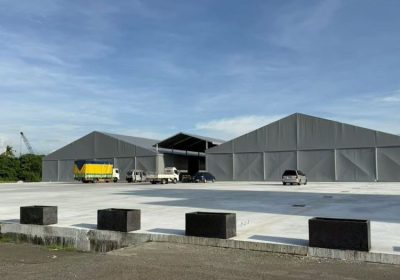
Temporary sports facilities are modular structures specifically designed for indoor athletic activities. Their primary framework consists of high-strength aluminum alloy, clad with PVC membrane, insulated sandwich panels, glass walls, or other enclosure systems.
Core Features:
- Aluminum alloy structure (6061-T6, 6082-T6)
- Large-span interior space
- Rapid installation and dismantling
- Temporary or semi-permanent use
- Customizable dimensions and layouts
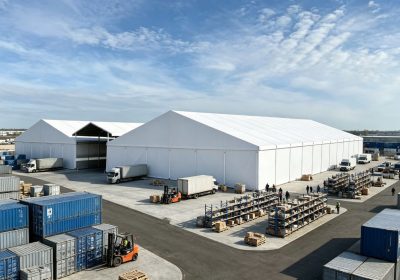
Temporary sports facilities can be directly installed on existing surfaces like concrete, asphalt, or compacted ground, making them suitable for both urban and remote locations.
Common Applications of Temporary Sports Facilities
Temporary sports halls accommodate diverse athletic events and activities, including:
- Basketball courts
- Volleyball courts
- Badminton courts
- Tennis courts
- Indoor soccer/mini-soccer fields
- Multipurpose sports halls
- Swimming pool enclosures
- Training and competition venues
These facilities are widely utilized by elementary/secondary schools, universities, sports clubs, local governments, and event organizers.
Advantages of Aluminum Structure Sports Facilities
Rapid Construction
Temporary sports facilities can typically be installed within 7 days, enabling swift restoration or expansion of sports programs.
Cost-Effectiveness
Compared to permanent sports buildings, aluminum-framed sports facilities offer:
- Lower initial investment
- Minimal foundation work
- Reduced design approval costs
Large-Span Design
Column-free interior structures provide:
- Maximized usable playing space
- Compliance with sports venue standards
- Enhanced visibility and safety
Modularity and Scalability
Facilities can be:
- Extended vertically or horizontally
- Relocated to new sites
- Reused for multiple projects
Types of Temporary Sports Facility Structures
Common structural designs for sports applications include:
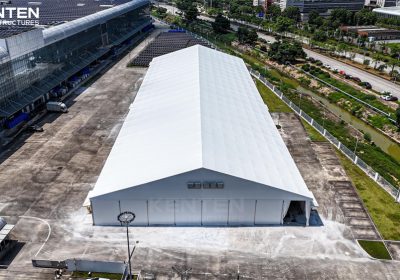
A-Structure Sports Halls

- Vertical side walls
- Preferred for basketball and multi-purpose courts
- Easy integration of insulation and lighting systems
Dome or Curved Sports Tents

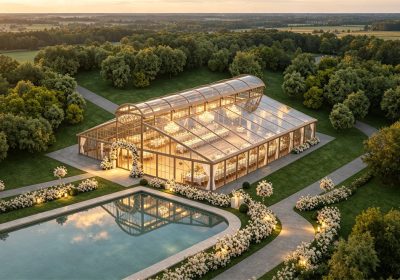
- Elegant arched roof
- Optimized airflow and acoustics
- Popular with schools and training centers
Igloo Structure or Pyramid Structures

- Large-span column-free spaces
- Contemporary architectural appearance
- Suitable for major sporting events
All structures can be customized based on site conditions and athletic requirements.
Sports Facility Flooring Solutions
High-quality flooring is critical for athlete safety and performance. Temporary sports facilities can be equipped with:
- Wooden sports flooring
- PVC sports flooring
- Aluminum alloy interlocking flooring
Flooring systems are selected based on sport type, usage intensity, and local standards.
Insulation, Ventilation, and Climate Control
Modern temporary sports facilities are designed for year-round use.
Optional systems include:
- Insulated sandwich panel walls
- Double-layer PVC roofing
- Air conditioning systems
- Ventilation and dehumidification units
- LED sports lighting systems
These solutions ensure a comfortable indoor environment in hot, cold, or humid climates.
Cost and Installation Timeline
Installation Timeline
- Small to medium-sized gymnasiums: 3-7 days
- Large-scale sports facilities: 10-20 days
Cost Comparison
Temporary sports facilities typically cost 30-60% less than permanent sports buildings, depending on scale, insulation grade, and ancillary features.
Project Example
- Swimming Pool — 30×60×4 meters
- Structure Type: Type A Structure Tent
- Purpose: Outdoor Swimming Pool
- Installation Time: 2 days

This facility provides a rapid and efficient shading solution for expanding outdoor swimming pools.
When to Choose Temporary Sports Facilities?
- Temporary sports facilities are ideal when you require:
- Rapid deployment
- Cost-effective construction
- Temporary or semi-permanent use
- Expandable playing space
- Minimal land impact
Particularly suited for schools, seasonal sports programs, emergency training centers, and temporary events.
Conclusion
Temporary sports facilities offer flexible, durable, and cost-effective solutions for modern athletic infrastructure. Utilizing aluminum structural systems, these facilities deliver professional-grade performance while significantly reducing construction timelines and investment costs.
KENTEN provides customized temporary sports facility solutions for global clients, adaptable to diverse sports, climatic conditions, and project requirements.
Frequently Asked Questions
1: Can temporary sports facilities be used year-round?
A: Yes, with appropriate insulation and HVAC systems, they can accommodate year-round usage.
2: What is the lifespan of an aluminum sports hall?
A: With proper maintenance, aluminum frames typically last 20-30 years.
3: Do the facilities meet sports standards?
A: Yes, they can be designed according to international sports venue dimensions and safety regulations.
4: Do temporary sports halls require permanent foundations?
A: No, heavy foundation work is unnecessary.
5: Can the facilities be relocated?
A: Yes, the modular structure supports disassembly and relocation.