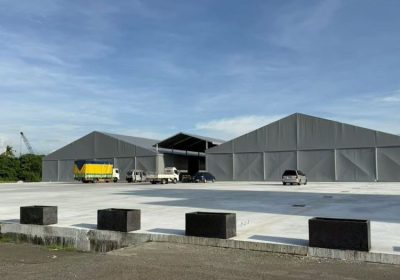
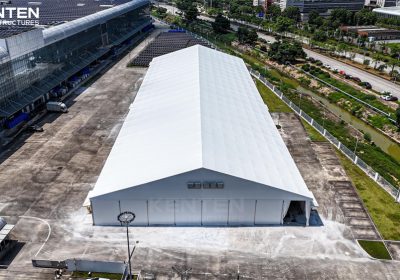
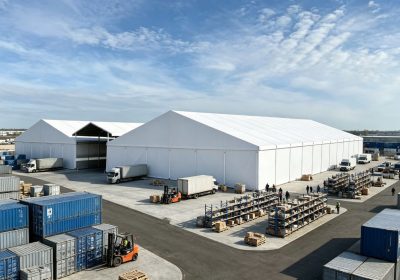
Introduction: The Context of Surging Industrial Storage Demand
Across manufacturing, logistics, e-commerce, construction, and energy sectors, storage capacity has become a critical challenge. Seasonal demand fluctuations, unpredictable market shifts, and rapid project expansion are driving businesses to seek faster, more flexible warehousing solutions.
Consequently, many enterprises are weighing:
Warehouse Tents (temporary/semi-permanent storage) vs Permanent Warehouses (traditional concrete or steel structures)
Each option offers distinct advantages—the optimal choice depends on budget, usage duration, location, and future plans.
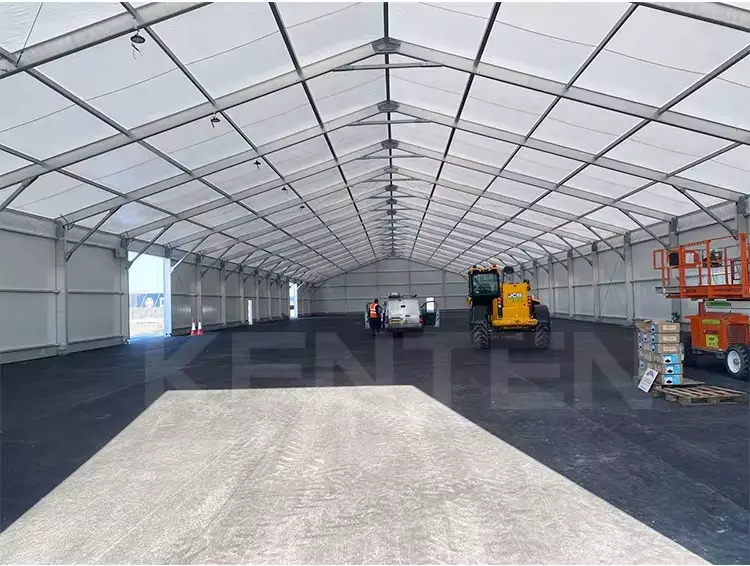
What is a Warehouse Tent?
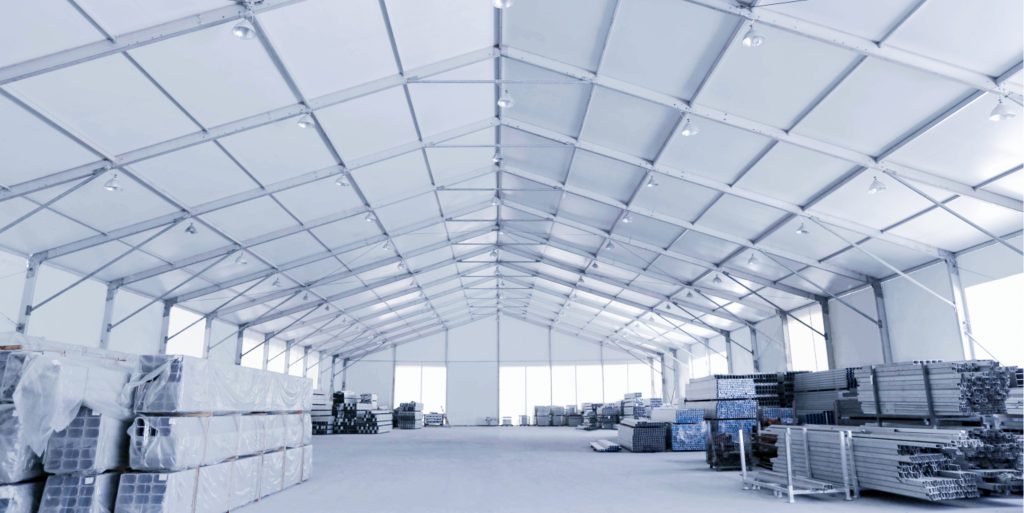
Warehouse tents are modular aluminum alloy structures featuring column-free, large-span interior spaces covered with industrial-grade PVC or insulated wall systems.
Core Features of KENTEN Warehouse Tents
- Aluminum alloy frame (6061-T6 / 6082-T6)
- 10–60 meter column-free spans
- PVC/ABS/sandwich panel wall systems
- 100% relocatable
- Suitable for nearly any ground installation
- Service life: 20–30 years (frame), influenced by environmental and temperature factors
Warehouse tents are widely used for temporary storage, logistics, manufacturing, and emergency facilities.
What is a Permanent Warehouse?
A permanent warehouse is a fixed structure built using concrete, masonry, or steel.
Construction requires:
- Land approval
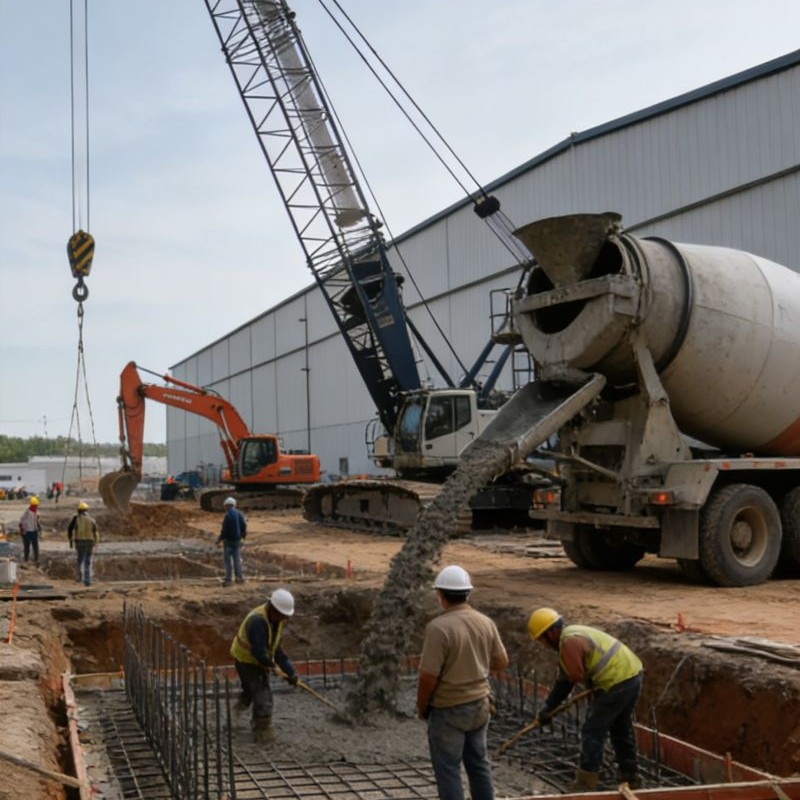
- Foundation engineering
- Design and engineering
- Utility connections
- Construction permits
- Minimum construction period: 6–12 months
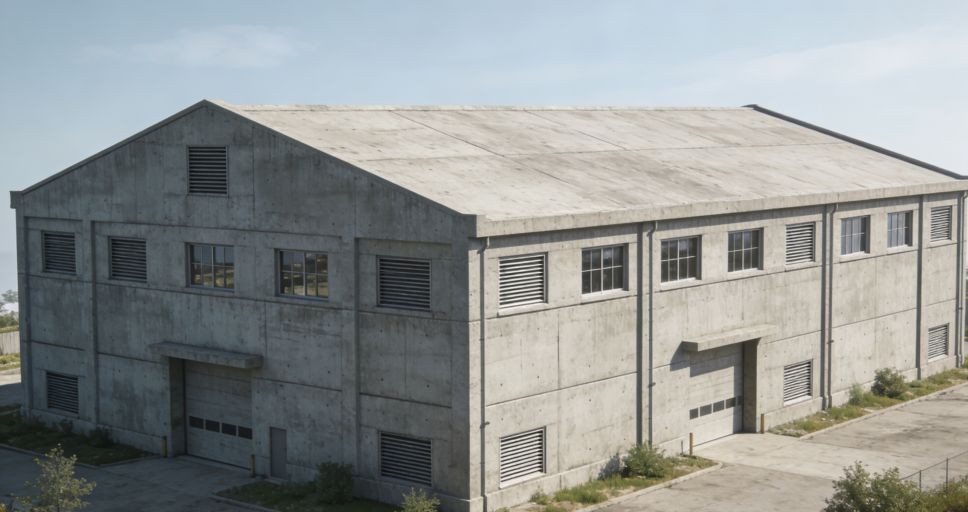
Permanent warehouses offer exceptional long-term durability but require substantial upfront investment and extended development cycles.
Warehouse Tents vs. Permanent Warehouses: Quick Comparison Chart
| Category | Warehouse Tent | Permanent Warehouse |
|---|---|---|
| Construction Time | 5–20 days | 6–12 months |
| Initial Cost | Low | High |
| Durability | 20–30 years (frame) | 40+ years |
| Flexibility | Fully relocatable | Fixed location |
| Permit Requirements | Minimal | Complex and cumbersome |
| Expansion | Simple and straightforward | Costly and time-consuming |
| Climate Control | Excellent insulation | Superior |
| Applications | Temporary/Quick Storage | Long-Term Fixed Operations |
Cost Comparison
Cost is the primary factor for businesses selecting storage tents.
Cost Advantages of Storage Tents
✔ 70% cheaper than permanent warehouses
✔ Includes structural framework + installation fees
✔ No heavy-duty foundation required
✔ Simplified permitting procedures
✔ Low long-term maintenance costs
Permanent Warehouse Costs
✘ High land and construction costs
✘ Architectural design fees
✘ Lengthy approval cycles
✘ Utility + foundation expenditures
For short-term deployment within 1-3 months, concrete permanent warehouses are simply impractical. Warehouse tents are often the only viable solution.
Construction Speed
Warehouse Tents
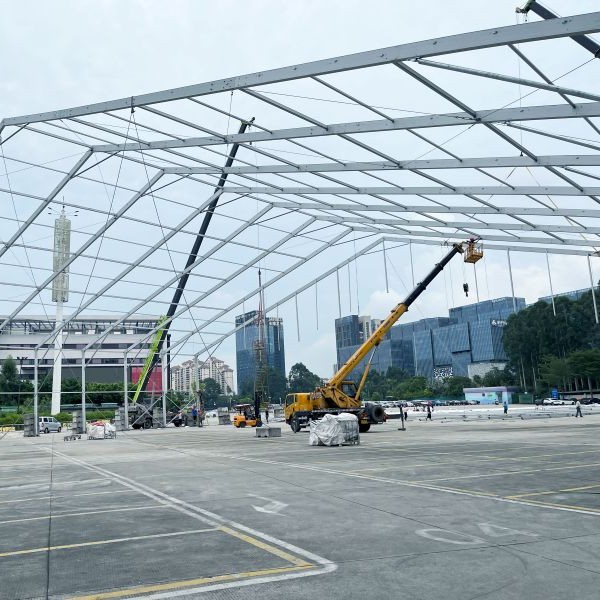
- Installation completed in 5-20 days
- Minimal foundation work
- Immediate operational readiness
Permanent Warehouses
- 6-12 months+
- Weather delays
- Approval delays
- Requires heavy construction machinery
*For rapidly growing businesses, speed is competitive advantage.
Durability and Service Life
Warehouse Tents (KENTEN)
- 6061-T6 Aluminum Alloy Frame: 20–30 years
- PVC/PVDF Fabric: 10–15 years
- Wind Load Resistance: Up to 120 km/h (75 mph)
- Snow load capacity depends on custom design
Permanent Warehouses
- Concrete/steel structure lifespan: 40+ years
For projects requiring 20–30 years of use, warehouse tents offer a robust alternative to traditional buildings.
Flexibility and Relocatability
Warehouse Tents
100% Relocatable
Scalable Up or Down at Any Time
Quick Dismantling
Ideal for Temporary Sites, Seasonal Storage, and Rapidly Changing Production Demands
Permanent Warehouses
Fixed Location
High Layout Modification Costs
Requires Long-Term Commitment
Environmental Control (Insulation/HVAC)
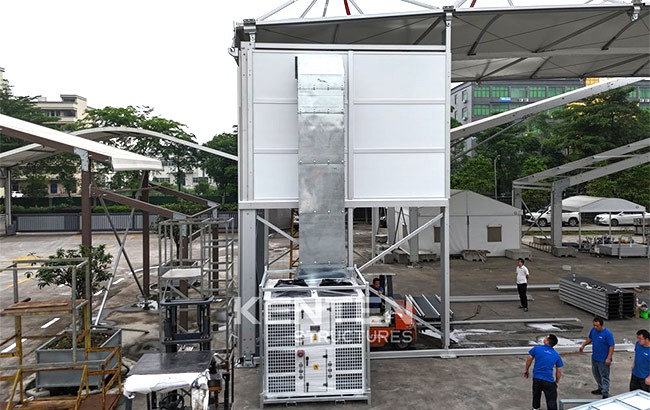
Modern storage tents offer temperature control capabilities equivalent to permanent warehouses.
Optional Configurations:
- Insulated sandwich wall panels
- Double-layer PVC roof
- Air conditioning system
- Ventilation system
Insulated storage tents are widely used for temperature-sensitive goods (electronics, food, chemicals).
When to Choose Storage Tents
Opt for storage tents when you require the following:
- Rapid deployment of storage space (within days or weeks)
- Temporary or semi-permanent use
- Reduced construction costs
- Flexible relocation capability
- Seasonal demand management
- Project-based or remote site storage
- Column-free, large-span spaces
Suitable for:
- Manufacturers
- Logistics service providers
- Construction companies
- Energy/mining projects
- Disaster relief agencies
- Event planning companies
Warehouse Project Cases (KENTEN)
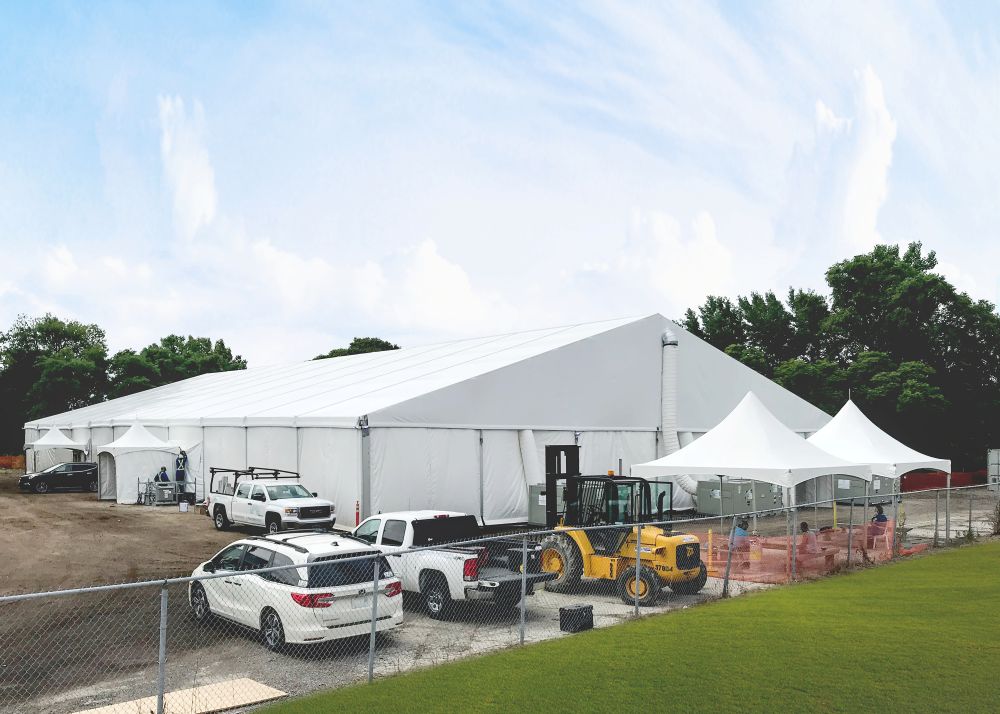
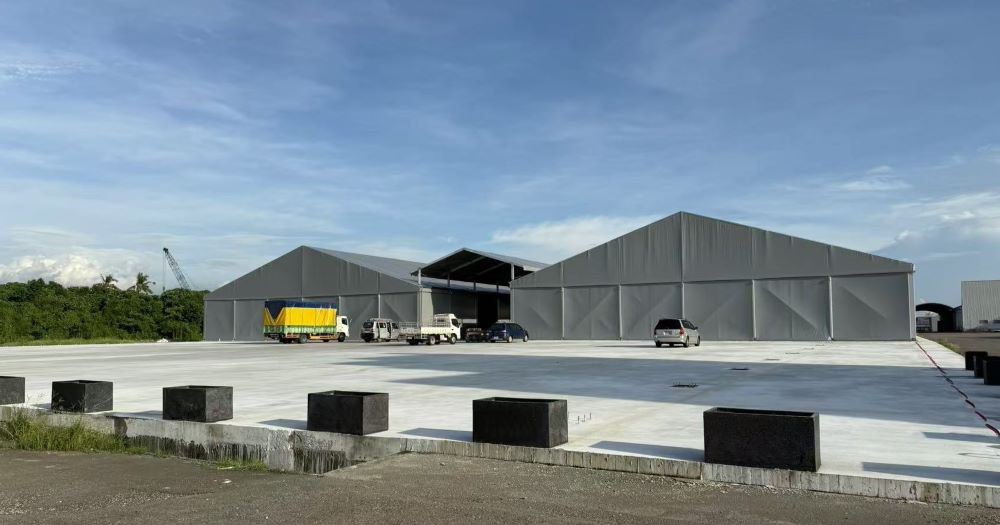
Two 30m span warehouse tents
Conclusion
Warehouse tents and permanent warehouses are both excellent solutions—but for different needs.
If you require:
- Fast, cost-effective storage space
- Temporary or semi-permanent use
- Relocatable structures
- Flexible expansion options
Choose warehouse tents.
For most industrial/warehousing needs, warehouse tents offer the optimal balance of cost, speed, and flexibility.
Choose KENTEN warehouse building solutions.
Frequently Asked Questions
Q1: How long does warehouse tent installation take?
Typically 3-10 days, depending on size.
Q2: Do warehouse tents require foundations?
No heavy foundations needed; concrete blocks, asphalt, and ground anchors suffice.
Q3: Can it withstand strong winds?
Yes. KENTEN structures are engineered to meet local wind and snow load requirements.
Q4: Can it be retrofitted for insulation?
Yes. Options include insulation, sandwich panels, and HVAC systems.